

Cosy Minimalism: Transforming Your Living Room for Autumn and Winter
Cosy Minimalism: Transforming Your Living Room for Autumn and Winter
There's a tension at the heart of autumn and winter decorating: the season calls for warmth, layers, and texture — but many of the most beautiful contemporary interiors are built on minimalist principles that resist accumulation. How do you make a room feel cosy without making it feel cluttered? The answer is cosy minimalism: a deliberate approach to seasonal layering that adds warmth through material quality and considered placement rather than volume.

What Is Cosy Minimalism?
Cosy minimalism (sometimes called 'warm minimalism' or hygge-inspired minimalism) holds that a space can be both stripped-back and deeply comfortable. It differs from standard minimalism in one key way: it prioritises tactile warmth. Where a pure minimalist space might have bare surfaces and hard edges, cosy minimalism layers in softness through carefully chosen textiles — without the visual noise of maximalist decorating.
The Cosy Minimalist Seasonal Transition: Five Principles
Principle 1: Let Texture Replace Colour
In a minimal space, bold seasonal colours can tip the balance into 'decorated' territory too quickly. Instead, use texture as your seasonal signal. A chunky wool throw in the same neutral palette as your existing sofa reads as a deliberate material upgrade rather than a seasonal decoration.
Principle 2: Work with Your Existing Palette
The cosy minimalist approach adds layers within your existing colour palette rather than introducing new colours. If your room is built on warm neutrals, deepen those neutrals with richer-textured versions of the same tones for autumn and winter.
Principle 3: One Significant Change Beats Many Small Ones
For your seasonal transition, identify one hero change — new curtain panels in a heavier fabric, or a reupholstered ottoman in a seasonal velvet — and build from there.

Principle 4: Choose Fabrics with Physical Weight
Part of what makes a space feel cosy is the literal weight of the materials. Heavy curtain fabric that falls straight to the floor, a thick wool throw that stays put, cushions that hold their shape — these physical qualities communicate warmth before someone even touches them.
Principle 5: Edit as You Add
For every textile you add for the season, consider removing something. A summer linen cushion replaced by a velvet one maintains the visual balance while making the seasonal shift.
The Cosy Minimalist Fabric List
Shop Cosy Minimalist Fabrics
Heavyweight linen, muted velvets, and textured weaves — the building blocks of a warm, considered home.
- Heavyweight linen: Maintains the clean, considered look of minimalism while adding physical presence
- Bouclé: The texture does all the work visually, so no colour is needed
- Merino wool or cashmere blends: The ultimate in tactile warmth without visual noise
- Velvet in neutral tones: Muted sage, warm taupe, slate — colour is present but not announcing itself
- Cotton-chenille: Soft, warm, and available in a range of neutral shades
Room-by-Room Cosy Minimalism
Living Room
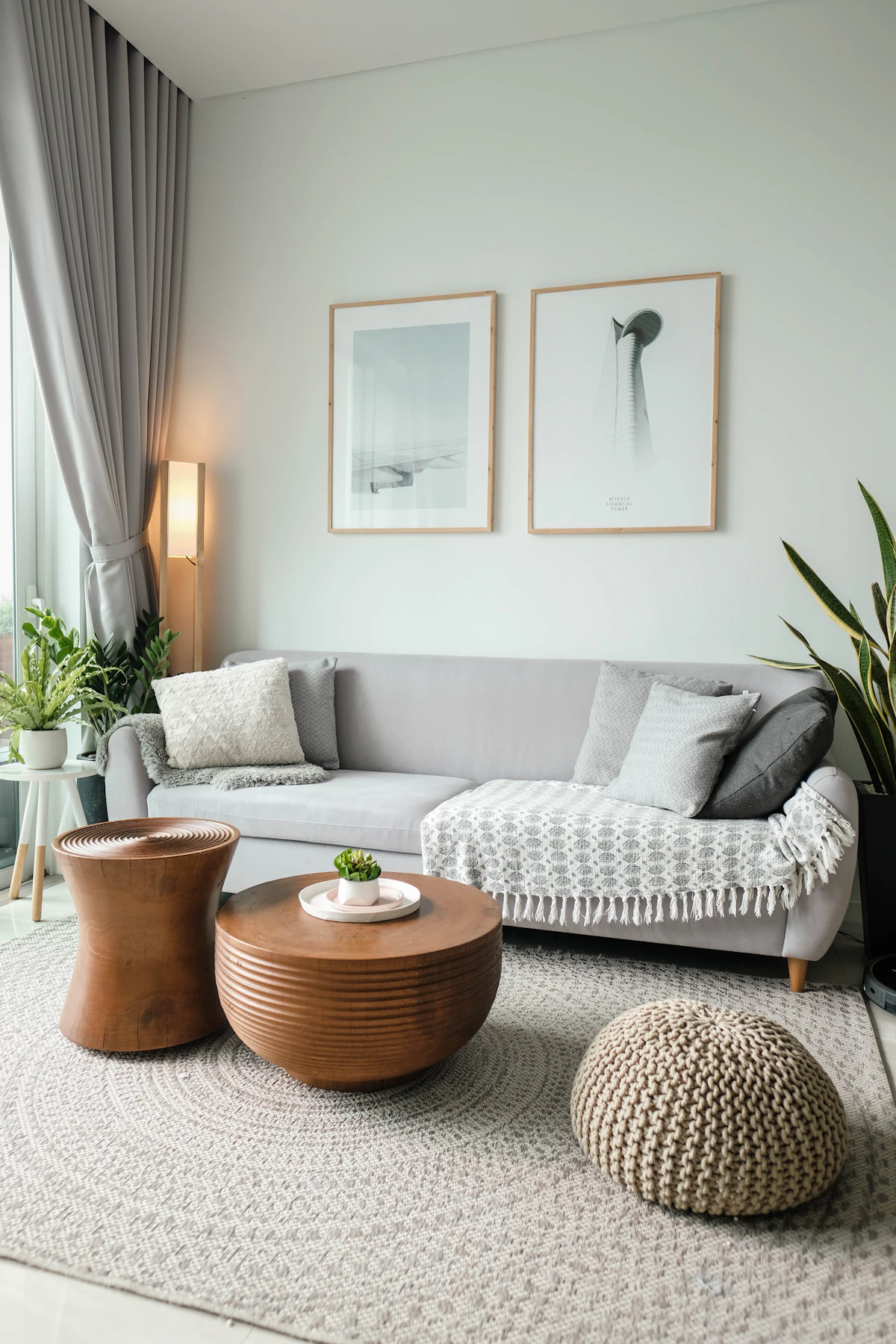
Focus on the sofa as your base. Add a velvet or bouclé cushion set (two or three, not seven) and one generous throw. Upgrade curtain panels to a heavier fabric that falls to the floor. Keep surfaces clear. A single candle or plant is your only decorative addition.
Bedroom
Swap lightweight summer bedding for heavier cotton or linen flannel. Add a wool or cashmere throw at the foot. If your headboard is upholstered, consider whether a seasonal fabric cover could deepen the warmth.
Conclusion
Cosy minimalism resolves the seasonal decorating dilemma beautifully. By prioritising material quality, physical weight, and tonal restraint over volume and decoration, you can make your home feel genuinely warm and welcoming for autumn and winter — without ever losing the clean, breathing quality that makes minimalist spaces so liveable.
SEO Keywords: cosy minimalism interior design, autumn winter living room ideas, hygge home decor, minimal cosy home, winter fabric layering, warm textures minimal decor
Dejar un comentario